Firm, clean energy for Central America, from solar to advanced geothermal.
Fireball develops and owns renewable energy assets in El Salvador: solar with batteries for industry today, the region's first advanced geothermal (EGS) plant tomorrow.
Growing power demand needs clean, firm energy

Global electricity demand is rising faster than in decades, after a long period of slow, predictable growth. Meeting it with clean energy, rather than more fossil fuel, is now the central challenge for grid planners and investors.
Artificial intelligence and data centers are a major driver: they need continuous, high-density power around the clock, a load profile that solar and wind alone cannot serve without storage. Clean, firm power fills that gap.
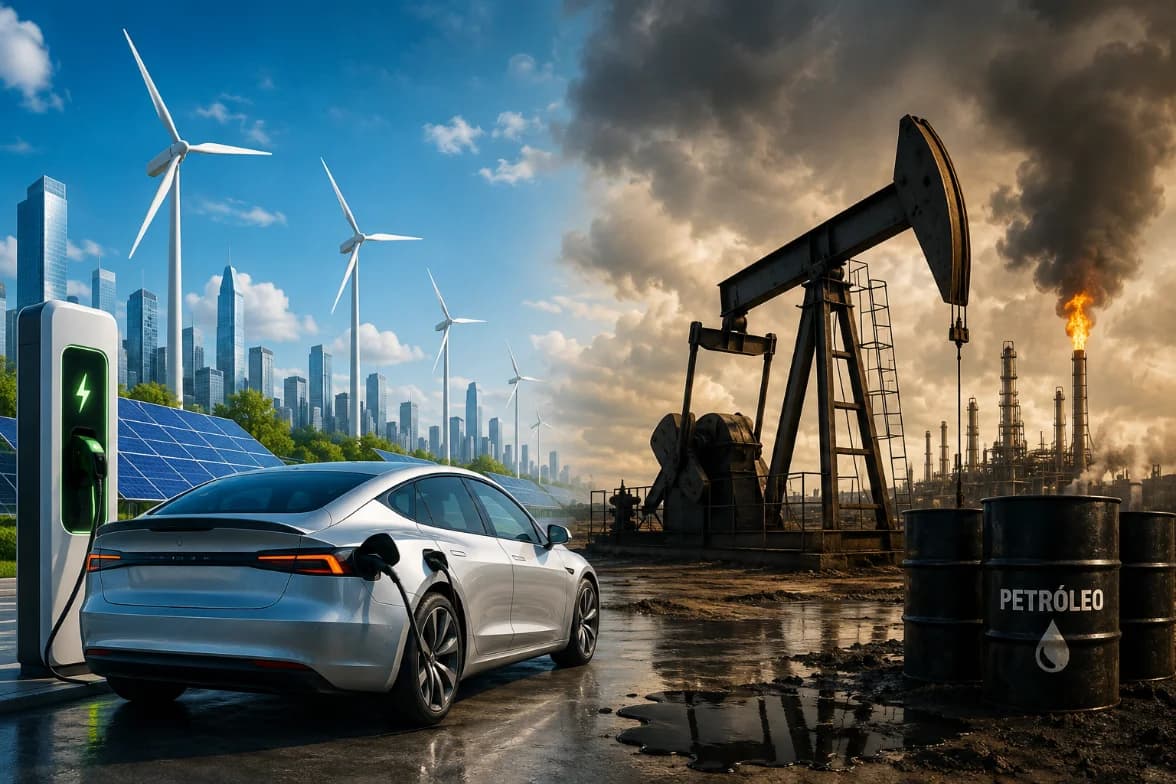
At the same time, transportation is electrifying. As electric vehicle fleets grow, demand shifts from the fuel pump to the grid, and the climate benefit depends on how clean that electricity is.
Geothermal is clean, domestic and always on: very low operating emissions, a small land footprint, and output that does not depend on the weather. Enhanced Geothermal Systems (EGS) bring that clean, firm power to places conventional geothermal could not reach.
A market that needs cheaper, firmer energy
The 2025–2026 legal framework (renewables promotion law, self-consumption regulation and the Geothermal Law) opens room for new private developers.
Three phases, one country
- Phase 1 · From 2027
Solar as a service
Solar-plus-battery systems on the rooftops of industries and free-trade zones. Zero upfront investment for the customer, a fixed monthly fee, operation and maintenance included, and a purchase option. Fireball keeps the assets.
Target: 20 MWp portfolio - Phase 2 · ≈2029
Solar plant with batteries
A 9.9 MW plant with 10 MWh of storage. It sells energy under contract to corporate customers.
9.9 MW · 10 MWh - Phase 3 · Commercial operation 2033
Geothermal
A 15 MW plant with firm 24/7 power and a long-term contract. It uses horizontal drilling, controlled stimulation and fiber-optic monitoring, proven in the U.S.
15 MW · firm 24/7
Solar builds track record, relationships and cash; geothermal builds long-term value. Each phase sustains itself.
Each project sits in its own vehicle (SPV), with debt non-recourse to the holding company.
The reference advanced geothermal developer in Central America
After the first plant, the plan is to expand the same geothermal field and add new plants across the region.
Risks and how we manage them
Geological
Exploration financing
Regulatory and permitting
Price and market
Customer credit
Induced seismicity
Construction
Each phase has gate conditions; no capital is committed to the next phase without meeting the previous one.
A staged program with independent vehicles
We are looking for partners for equity (family offices, climate VC, infrastructure investors) and for project financing (multilateral and development banks, climate funds).
The full financial model, returns and sensitivities are available under a confidentiality agreement.
From incorporation to geothermal commercial operation
- 2027
Incorporation, first solar contracts, pre-seed.
- 2028
Growing solar portfolio, seed.
- 2029
Solar plant and geothermal exploration.
- 2030
Resource validation.
- 2031–2032
Financial close and construction.
- 2033
Geothermal commercial operation.
Timeline, sources of return and value potential
Entry at the lowest valuation stage of the program, with a solar portfolio generating cash.
Validating the geothermal resource is the main re-rating milestone.
Return tied to an operating asset with contracted revenue and non-recourse debt.
Expected returns, the distribution schedule and base-case sensitivities are shared under a confidentiality agreement.
Request data room accessFounder


Request the Investment Memorandum
For inquiries from institutional investors, development banks, and infrastructure funds.
Request more information